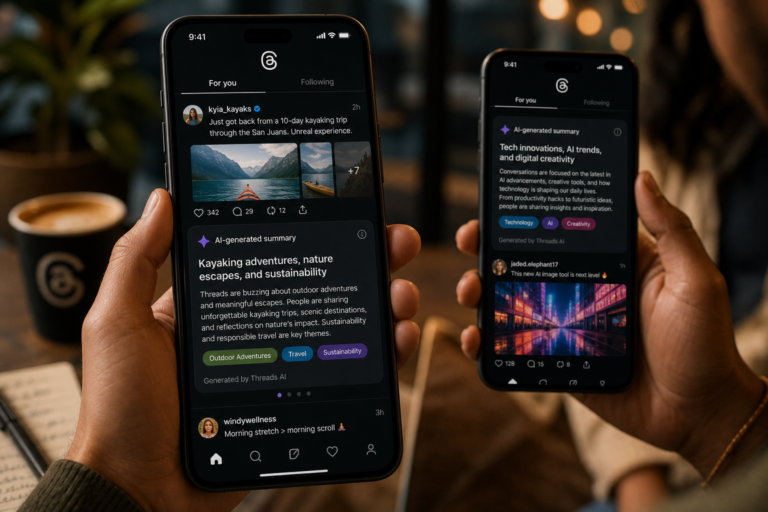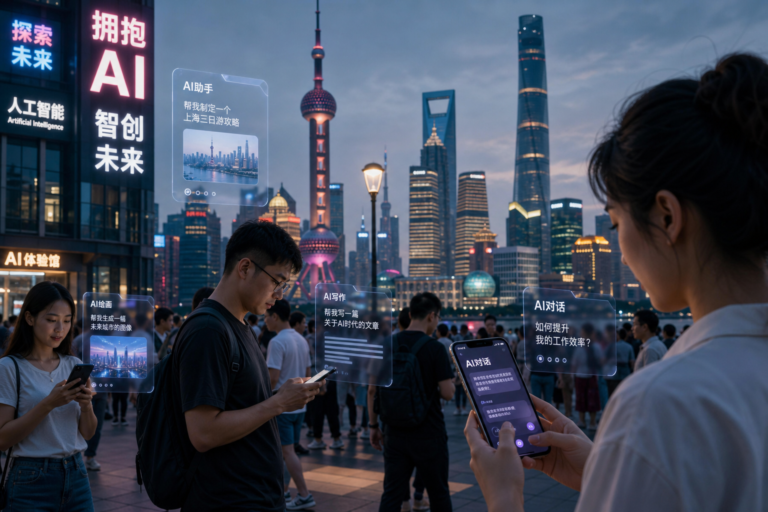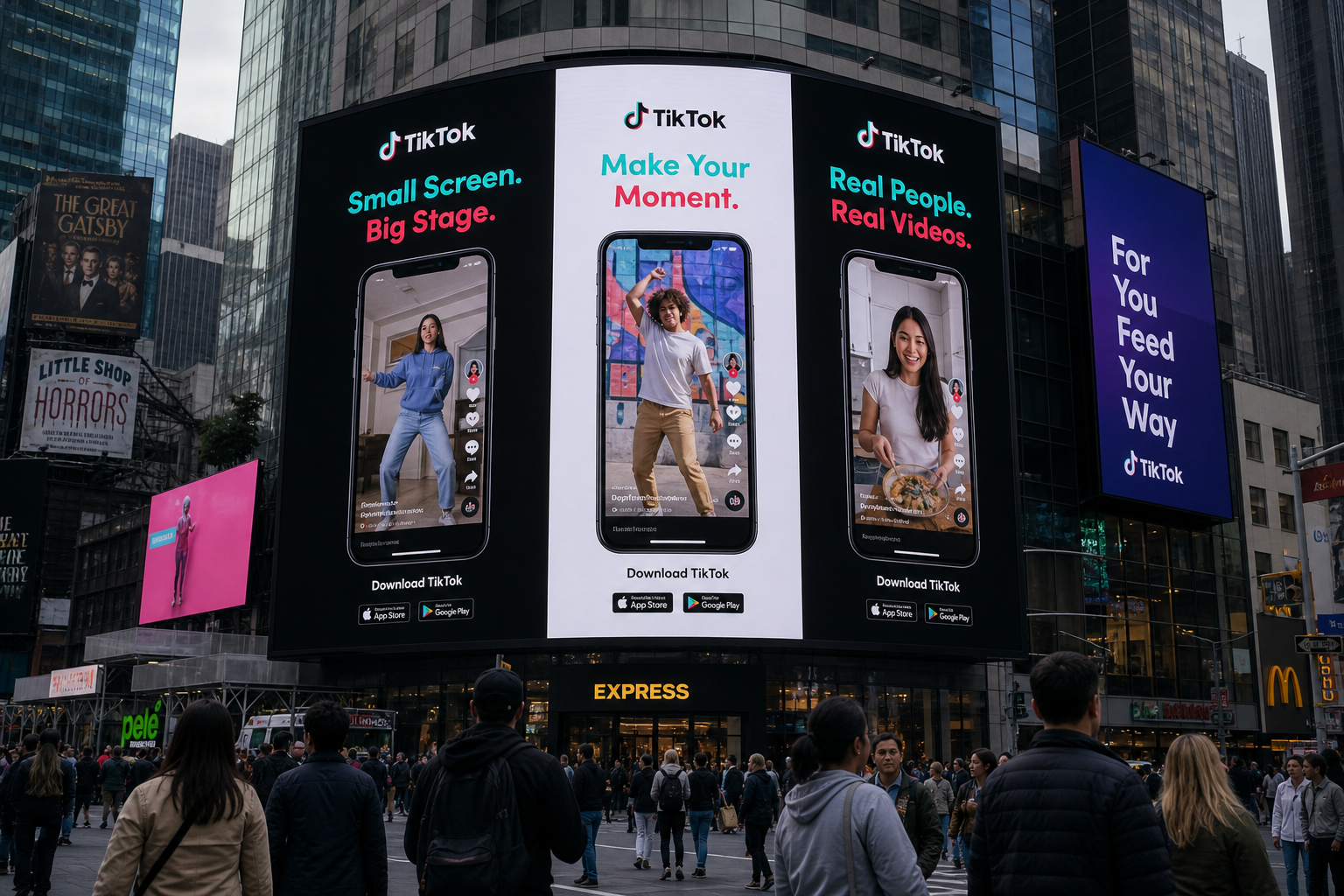
TikTok is taking its advertising strategy to a whole new level. In a cutting-edge move, the social media giant has expanded its AI-enhanced advertising campaigns beyond mobile devices, launching ‘Out of Phone’ campaigns in partnership with Vistar Media. This initiative strategically places AI-driven content on over one million digital out-of-home screens worldwide.
With this expansion, TikTok aims to bridge the gap between digital and physical advertising. By extending its reach to public displays, TikTok not only amplifies its brand presence but also creatively leverages AI optimization to connect with audiences beyond the confines of personal devices.
So, what exactly is happening here?
TikTok has cleverly integrated its mobile-first, AI-driven advertising model with the physical world through an extensive network of digital screens. These screens are strategically positioned in high-footfall areas—think shopping malls, airports, and public transport hubs—offering brands the tantalizing opportunity to engage consumers in real time, outside the typical social media environment.
But why does this matter now?
The strategy signals a significant evolution in digital advertising. As consumers become increasingly adept at tuning out advertisements, TikTok’s move offers a fresh, immersive approach. By embedding AI-generated content into daily environments, TikTok creates interactive experiences that capture attention and foster deeper consumer engagement.
Here’s the thing: digital out-of-home (DOOH) advertising is not new, but TikTok’s integration of AI-driven content sets a new benchmark. The campaigns are tailored through advanced AI algorithms that curate and adapt content based on location-specific demographics and real-time data analytics.
For developers and advertisers, this means that campaign strategies must evolve to leverage this new platform. The capability to deliver personalized content on public platforms opens up new pathways for creative storytelling and engagement metrics.
According to industry insiders, the use of AI in these campaigns has resulted in more engaging content, higher conversion rates, and increased brand recall. Some advertisers have already reported notable improvements in campaign performance, thanks to the dynamic and adaptive nature of AI-optimized content.
Yet, critics highlight potential privacy concerns, given AI’s innate reliance on data. As these campaigns proliferate, regulatory scrutiny may intensify, demanding robust data protection protocols to safeguard consumer information.
Comparatively, TikTok’s rival platforms, such as Instagram and Snapchat, have yet to scale similar out-of-phone ad initiatives to the same global extent. This move potentially positions TikTok ahead in the competitive social media advertising landscape by offering a unique cross-channel advertising solution.
Wrapping up, TikTok’s expansion into the physical advertising realm is more than just an innovative twist on traditional DOOH campaigns. It represents a strategic shift toward making AI an integral part of the advertising ecosystem. As this trend grows, we might soon see AI-generated content become a mainstay not just on screens in our hands but on every screen in our surroundings.
Here’s a prediction: as AI technology becomes further entrenched in marketing strategies, we could anticipate more tech brands infusing AI-powered content into everyday environments, crafting experiences that are not only personalized but also impossible to ignore.
About the Author