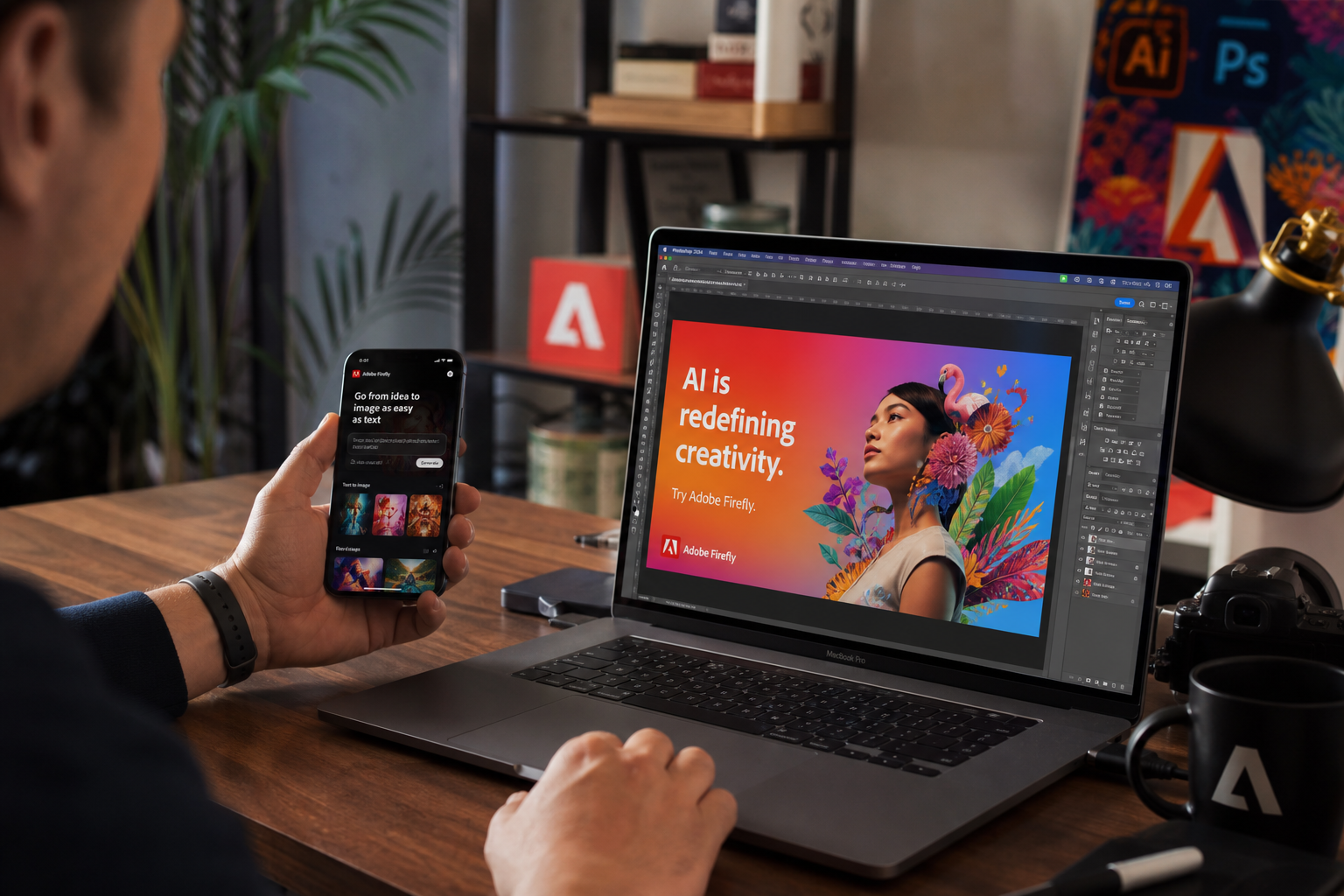
Adobe just moved Firefly from a browser-first AI studio into a phone app, and that changes where creators can actually use it. The new Firefly mobile app for iOS and Android brings image generation, video generation, edits, and Creative Cloud syncing into a single pocket workflow. For designers, social teams, and solo creators, Adobe isn’t selling a concept anymore — it’s putting a production tool where the camera already lives.
This matters right now because AI apps no longer win by making impressive demos; they win by fitting into the daily work of people who ship posts, ads, thumbnails, mockups, and videos on deadline.
Adobe announced the Firefly mobile app as part of its broader Firefly update, giving users a dedicated way to create and edit AI visuals without starting on a desktop. The app lets users generate images from prompts, create short video assets, turn images into video, and apply generative edits from a phone. Adobe also connects the app to Creative Cloud, so work started on mobile can move into tools like Photoshop, Illustrator, Premiere Pro, or Adobe Express when a creator needs more control.
The company also tied the app to its expanding Firefly model ecosystem. Users can work with Adobe’s own Firefly models and, where available, select partner models through Firefly’s model picker. Adobe has promoted this approach as a way to give creators choice while keeping the workflow inside its own app layer. Worth noting: Firefly’s biggest pitch still rests on Adobe’s claim that its own commercially oriented models suit professional use, with Content Credentials attached to AI-generated assets so teams can track how media came together.
For users, the shift cuts out a lot of friction. A creator can capture a reference image, build a concept, test a background, generate variations, and hand off a file before opening a laptop. Can a phone-first AI studio finally keep pace with the speed of social video and campaign work? Adobe clearly thinks so, and the bet makes sense because creative work now starts in messages, camera rolls, shared folders, and content calendars as often as it starts inside a desktop editing suite.
The technical story sits in the mix of model access, format support, and cloud handoff. Firefly already supports text-to-image generation, generative fill-style edits, text effects, and newer video tools across Adobe’s web and desktop products. The mobile app brings that toolset closer to field production, while Creative Cloud sync keeps files available across devices. Adobe’s use of generative credits also gives the company a familiar meter for paid AI usage, which matters for teams that need predictable billing instead of a pile of separate AI subscriptions.
Adobe’s message to creators centers on control and commercial confidence, not just speed. The company has repeatedly positioned Firefly as an AI family built for creative professionals, and it has leaned on Content Credentials to answer concerns about disclosure. Still, artists and photographers continue to question how AI tools change the value of original work, and some creators don’t trust any large platform that packages generative media as a faster production layer. The catch? Adobe needs to prove that mobile Firefly improves real workflows without flattening creative decisions into prompt roulette.
Competition makes that challenge sharper. Canva has pushed hard into AI-assisted design for marketers and non-designers, while Runway, Pika, Luma, and other video-focused apps chase creators who want fast motion clips. Google and OpenAI also keep raising expectations for image and video generation quality, even when their tools don’t sit inside a full creative suite. Adobe’s advantage comes from its installed base: millions of professionals already finish work in Photoshop, Premiere Pro, Illustrator, Lightroom, and Express, so Firefly mobile can act as a front door instead of a separate destination.
Here’s the thing: the best AI app isn’t always the model with the flashiest sample clip. The best app is the one that survives contact with revisions, approvals, brand rules, export formats, and deadlines. Adobe Firefly’s mobile launch points to a clear direction for AI creation in 2026: creators will expect serious generation tools to live beside their camera, sync across their software stack, and carry proof of origin by default. If Adobe keeps tightening that loop, Firefly won’t just compete as another generator; it will become the mobile intake layer for professional creative work.
About the Author