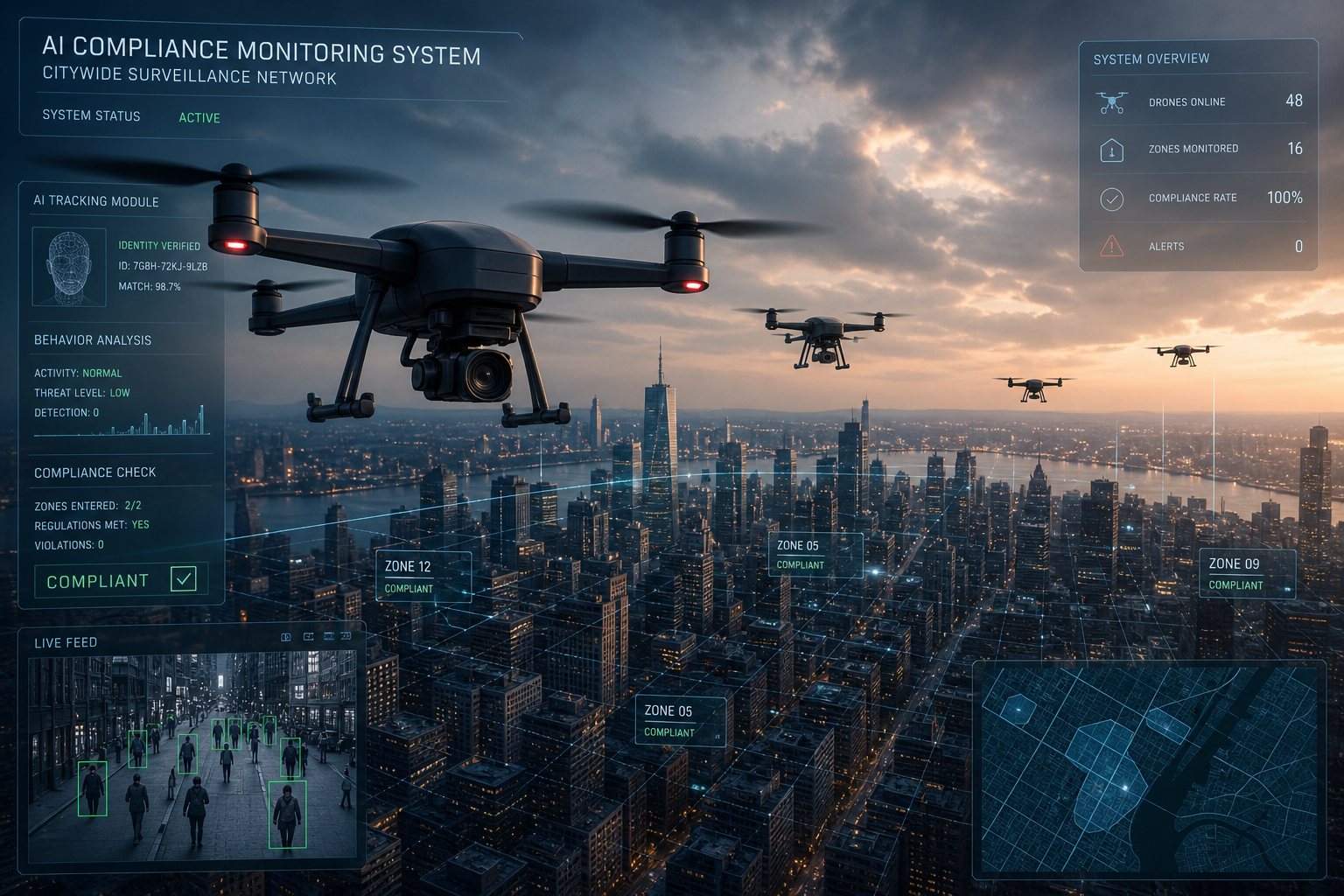
The FAA is revolutionizing how it manages the skies with cutting-edge AI-powered tools designed to regulate and enforce drone compliance, dramatically speeding up enforcement processes.
In an era where drones buzz in increasing numbers over neighborhoods and cities, ensuring that these devices follow regulations has become a pressing issue. The FAA’s new AI apps, designed explicitly for drone regulation, represent a significant step forward in maintaining aerial safety and compliance.
The FAA has introduced two groundbreaking apps—Discover (Drone Information, Safety, Compliance, Verification, and Reporting) and Deter—that leverage AI to enforce drone regulations. These apps process a drone’s Remote ID (RID) signal, similar to a “license plate” in the sky, to instantly match it with the pilot’s identity and compliance status. The result? A streamlined law enforcement response that reduces the time from hours or days of paperwork to mere minutes.
But what’s the real kicker? Non-compliant pilots are swiftly identified and penalized, turning a previously cumbersome process into an efficient operation. The Deter program fast-tracks fines and violations, while also providing a path for quick admission of wrongdoing, potentially reducing penalties. It has radically cut down case resolution times from months or even years to just days.
The technical specifications of these applications are designed to enhance efficiency dramatically. With AI processing RID signals in real-time, compliant pilots can continue their operations unhindered, while rogue drones are flagged immediately. The integration of these tools with existing platforms like Drone Buddy, Aloft, and AutoPylot makes it easier for drone operators to ensure compliance, while offering law enforcement the tools they need for rapid action.
However, these developments have not been without controversy. Some critics argue that increased surveillance could infringe on privacy rights. Yet supporters emphasize that these measures are essential for public safety in increasingly crowded skies. The apps also offer training for local law enforcement, ensuring they have the knowledge to handle non-compliant cases effectively.
Comparatively, these FAA tools are setting a new benchmark in the drone industry. Other countries looking to implement such measures might find these apps a model worth emulating. As drone technologies advance, the need for robust regulatory mechanisms becomes ever more crucial, and the FAA is ahead of the curve in setting such standards.
So, what’s next for drone enthusiasts and operators? Prioritizing RID compliance is essential. With AI-driven tools like Discover and Deter being deployed, non-compliance is no longer an option that can slip through the cracks unnoticed. These moves forecast a future where drone operations could be as heavily regulated as traditional aviation, ensuring safety and compliance are key.
About the Author