The White House put law enforcement at the center of its public messaging this week, pairing a Police Week proclamation with a new release praising President Trump’s support for officers. The official White House news page dated the proclamation May 11 and the follow-up release May 13. Neither summary laid out a technology plan, and that absence matters for an AI sector watching federal public-safety priorities closely.
For police-tech companies, Washington’s public-safety language often arrives before the procurement memos, grant rules, and data standards that decide who actually sells into the market.
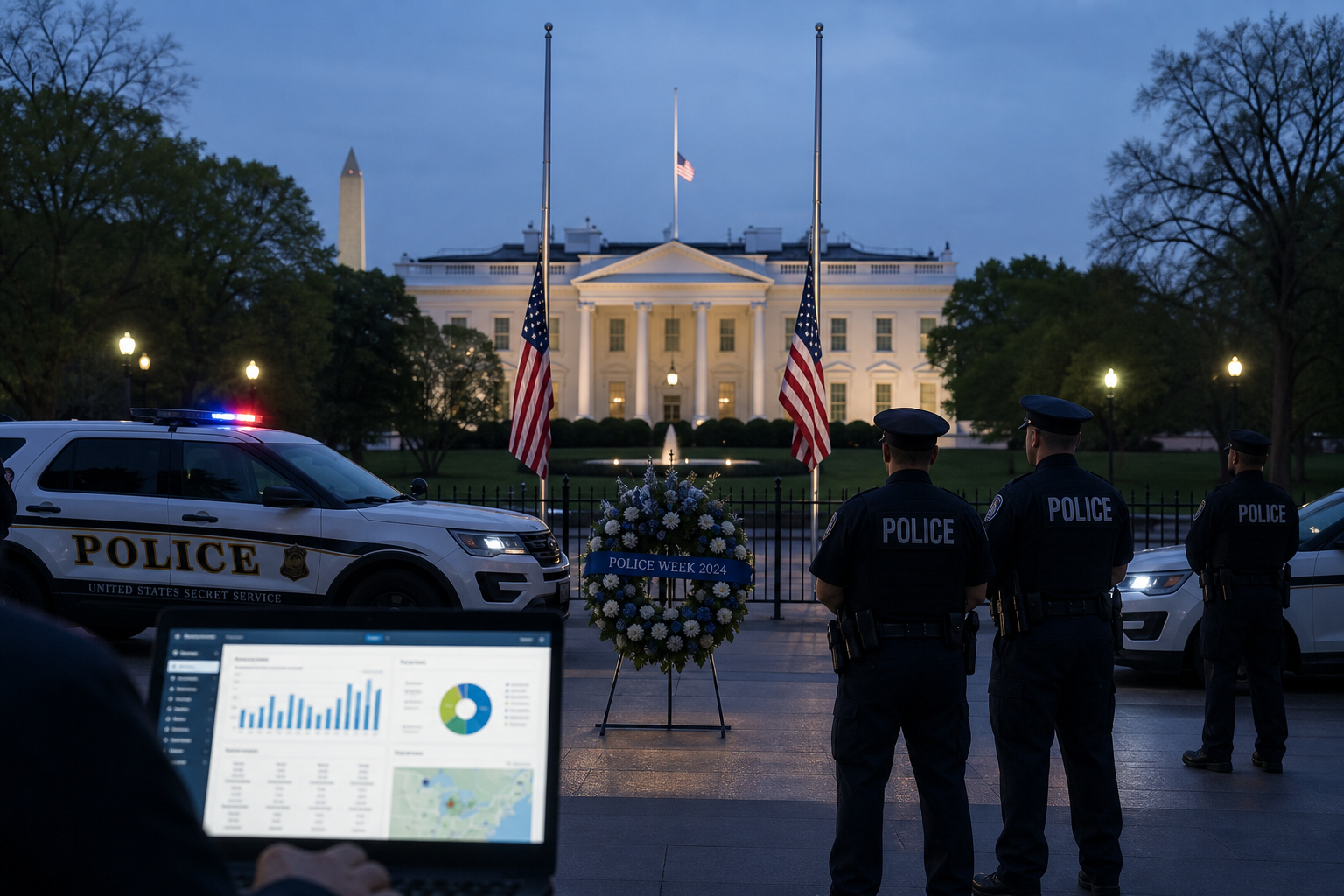
The May 11 proclamation designated Peace Officers Memorial Day and Police Week, according to the official White House news page, and framed the period as a formal tribute to fallen law enforcement officers. Two days later, the White House posted a release titled "President Trump’s Unwavering Support for Law Enforcement is Making America Safe Again," a message that highlighted the administration’s stance on policing and public safety. The same news feed also carried nominations, family-support messaging, and other federal updates, but the law enforcement items formed the clearest policy signal in the latest batch.
The White House material, as summarized in the official feed, didn’t specify new AI tools, police databases, camera systems, analytics software, or procurement programs. But the timing places the administration’s public-safety posture back in front of a market that has changed sharply since the first wave of body-camera adoption. Real-time crime centers, automated license plate readers, drone programs, records management software, and AI-assisted video review now sit inside the day-to-day operating stack for many agencies.
That creates a direct business question for developers and vendors: What happens when that political signal meets AI procurement? A White House emphasis on law enforcement can encourage agencies to push for faster grant support, clearer federal backing, or looser purchasing timelines, even when a specific release doesn’t name software. The catch? Public-safety AI also sits in one of the most scrutinized corners of the tech economy, where accuracy, audit trails, privacy controls, and local oversight can decide whether a pilot becomes a contract or a lawsuit.
Here’s the thing: police technology doesn’t operate like consumer AI. A model that sorts hours of body-camera footage, flags objects in fixed-camera video, or links records across systems needs clear performance numbers, documented error rates, role-based access, retention rules, and logs that investigators can defend later in court. False positives carry real costs — not churn, but searches, stops, misidentification, and civil-rights claims. So any federal push that raises demand without matching rules on testing and accountability will create uneven results across cities, counties, and state agencies.
The official White House summaries don’t include outside reaction, and they don’t quote civil-liberties groups, police unions, city technology officers, or AI vendors. Still, the administration’s framing gives supporters and critics a clear opening. Supporters will read the May 11 and May 13 items as a green light for more resources, faster equipment cycles, and stronger backing for officers. Critics will ask whether public-safety language can turn into wider surveillance capacity before agencies publish enough detail on data use, model testing, and community review.
Competitive pressure will sharpen that debate. Companies such as Axon, Flock Safety, Motorola Solutions, Palantir, and smaller AI analytics vendors already compete for agency budgets tied to evidence management, camera networks, dispatch tools, data integration, and investigative search. Cloud providers also want a larger role because modern police data systems need storage, security controls, and compute capacity for video-heavy workloads. And as cities compare products, vendors that can show measurable accuracy, clean audit logs, and strict permission controls will have an easier time winning trust than firms that sell broad promises.
The White House hasn’t announced an AI policing program in these latest items, so the near-term story isn’t a new product mandate. The sharper read is that public safety has moved up the federal message queue again, and AI suppliers should expect agencies to ask how their tools fit that priority. The next concrete signal will come from grant language, agency guidance, or budget documents; when those arrive, the winners won’t be the loudest AI brands, but the companies that can prove their systems hold up under police work, public records requests, and courtroom scrutiny.
About the Author