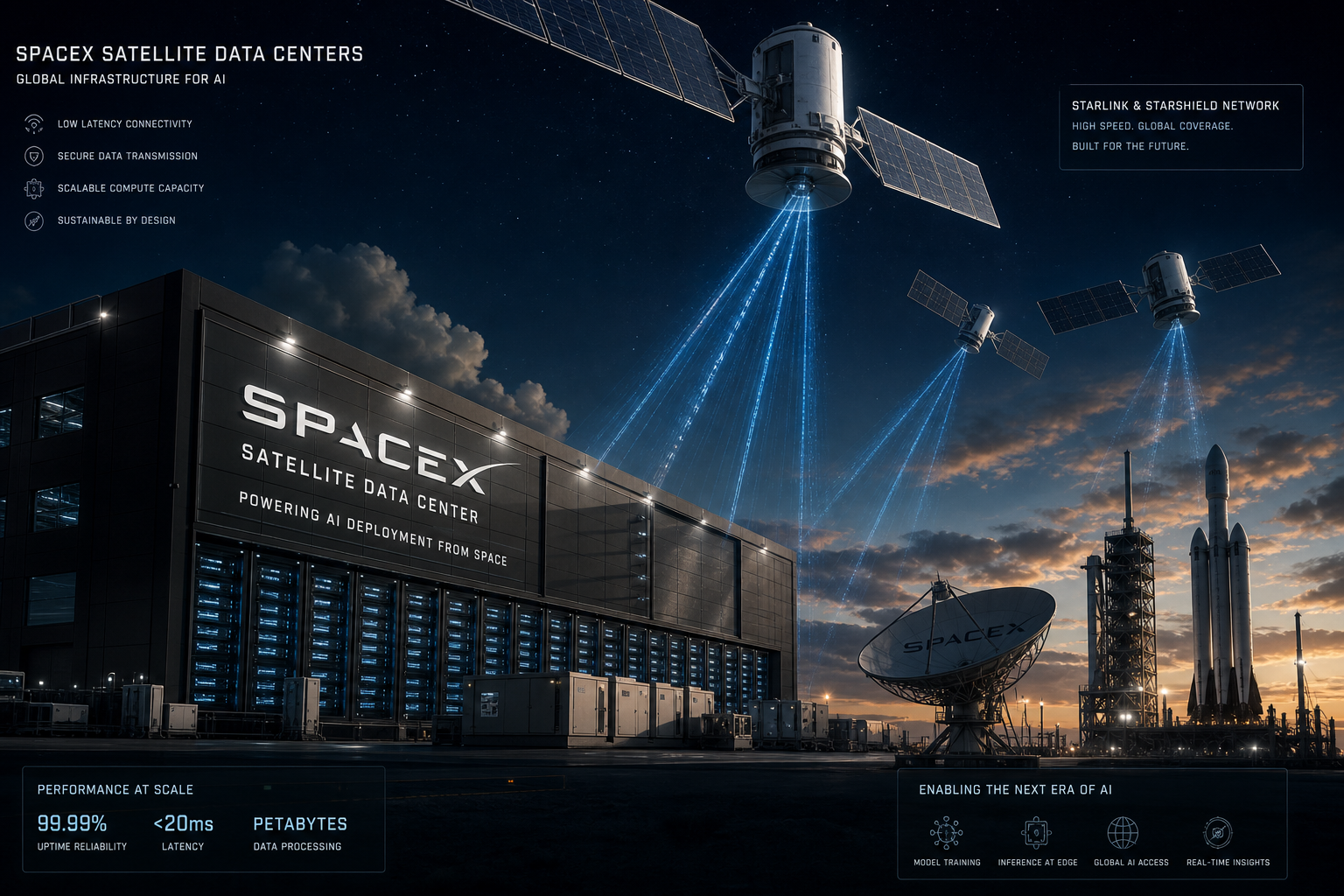
SpaceX has entered into a strategic partnership with Anthropic to provide the computational muscle needed for Anthropic’s surging demand — a move that could reshape the AI industry’s landscape. This collaboration leverages SpaceX’s vast satellite network to offer scalable, high-powered data centers essential for running complex AI models.
This matters now for a simple reason: the demand for AI capabilities, especially from companies like Anthropic, has soared to unprecedented levels.
The partnership between Elon Musk’s SpaceX and AI research leader Anthropic marks a significant milestone in AI infrastructure development. The deal, announced May 7, 2026, includes SpaceX providing cloud-based computational support designed to handle the intricate processes of Anthropic’s Claude AI.
Anthropic’s Claude AI, known for its advanced conversational abilities, has seen such a rapid uptick in user engagement that traditional computing resources were strained. Ethically aligned AI, which is at the core of Anthropic’s mission, requires a significant computational backbone. SpaceX’s satellite capabilities make it a prime partner, offering not just speed but global coverage — a necessity for such expansive AI operations.
Here’s the catch: This collaboration isn’t just about meeting immediate computational needs. It’s a strategic maneuver to position both companies advantageously on the geopolitical stage. With increased AI deployment, ensuring secure and reliable data transmission becomes pivotal. SpaceX’s satellites promise encrypted, low-latency links crucial for global AI interactions, making this partnership not just technologically savvy but also politically astute.
From a technical standpoint, the data centers leverage Starlink’s satellite internet to provide low-latency, high-bandwidth connections. The centers are equipped with the latest NVIDIA GPUs, offering the parallel processing power necessary for AI models to function at scale. This upgrade ensures that Claude can operate without lag, even with millions of simultaneous interactions worldwide.
Voices in the industry have praised the collaboration. Technology analyst Jason Huang mentioned that this partnership is “a glimpse into the future of AI-delivered services, where infrastructure isn’t just about terrestrial data centers but extends into orbital planes.” There are, however, concerns about privacy and data sovereignty given the global nature of satellite communications.
Comparatively, while other companies like Google and Amazon have expanded their cloud services to support AI, none have the readily available satellite infrastructure that SpaceX boasts. This unique advantage could give Anthropic a competitive edge, especially in underserved regions where traditional broadband is limited.
In conclusion, this partnership represents more than just a technological upgrade — it’s a strategic alignment that might set new standards for AI resource deployment. As AI demand grows exponentially, integrating space technologies into computing strategies could become the industry norm. Expect more partnerships to follow in this trajectory.
About the Author