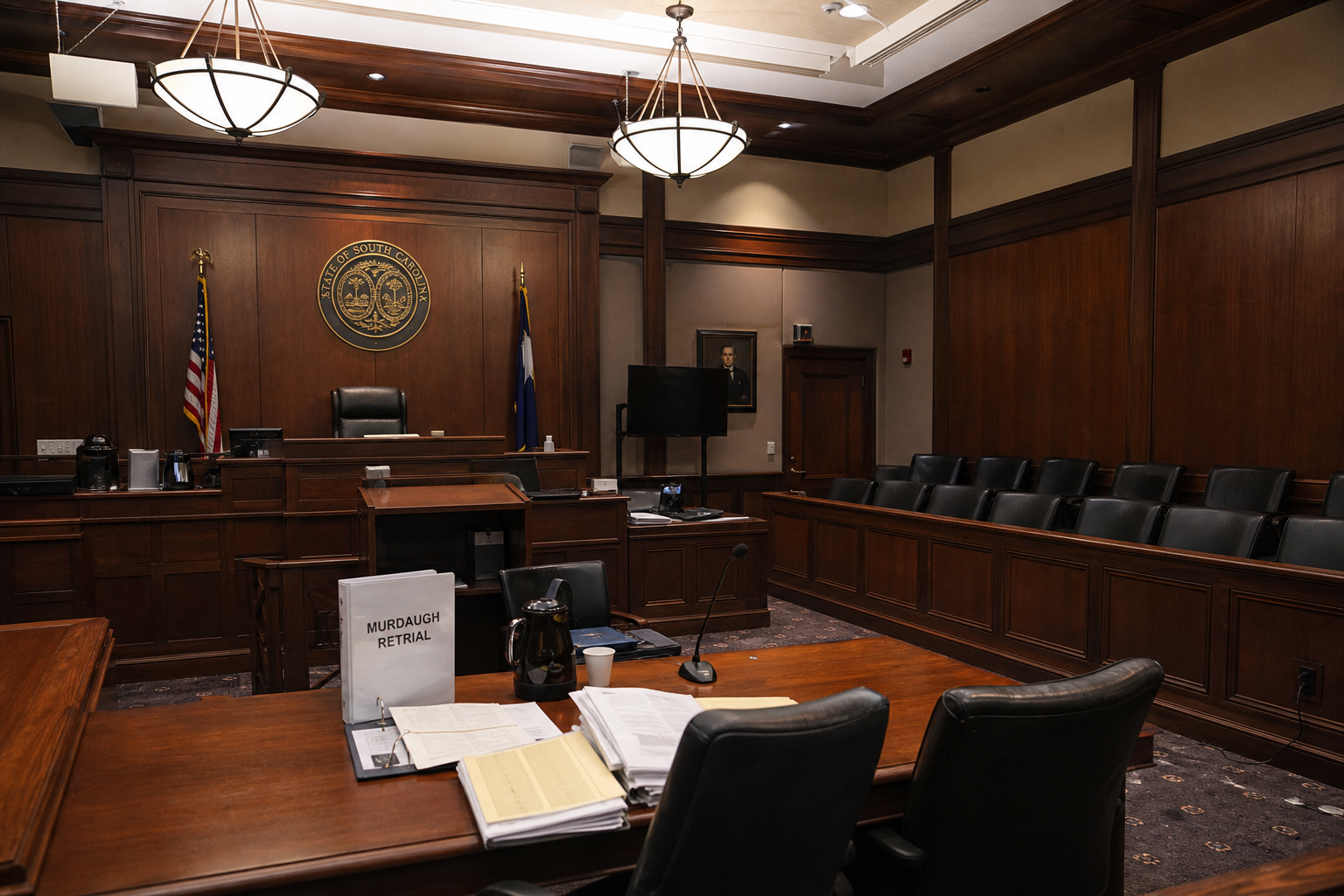
Alex Murdaugh’s 2023 double murder convictions no longer stand after South Carolina’s highest court threw them out in a unanimous ruling. The 5–0 decision turned on former Colleton County Court Clerk Rebecca “Becky” Hill’s improper interactions with jurors, which the South Carolina Supreme Court said denied Murdaugh his right to a fair trial by an impartial jury. Murdaugh won a new murder trial, but he won’t walk free.
The ruling matters now because one of America’s most watched criminal cases has snapped back from verdict to pretrial uncertainty.
The South Carolina Supreme Court sent the case back to circuit court, reopening the murder prosecution tied to the killings of Murdaugh’s wife, Maggie, and son, Paul. A jury convicted Murdaugh in 2023, but the court found that Hill’s conduct crossed a constitutional line and tainted the process enough to require a do-over. The decision doesn’t acquit Murdaugh, and it doesn’t erase the charges. It strips away the verdict and forces prosecutors to prove the case again.
The court’s ruling also criticized the trial’s handling of evidence tied to Murdaugh’s unrelated financial crimes. During the first trial, prosecutors presented extensive material about thefts and fraud that sat outside the murder counts, arguing that the financial pressure helped explain motive. The Supreme Court didn’t just focus on Hill’s juror contact; it also raised concern about how far the trial court let the financial-crime evidence run inside a murder case. Then, the case moved into a new phase with immediate practical questions: when prosecutors can retry it, where the retrial should happen, and which judge will preside now that original trial judge Clifton Newman has retired.
The real-world impact reaches beyond one defendant because the ruling puts courthouse conduct under a national microscope. Clerks, bailiffs, judges, and lawyers all work inside the fragile machinery of jury trials, and the court’s opinion makes clear that informal or improper contact with jurors can overturn even a massive conviction. For prosecutors, the decision creates a high-cost replay of a case they already won once. For defense teams across the country, it offers a fresh example of how post-trial juror issues can become case-ending appellate arguments.
Here’s the thing: the legal mechanics matter as much as the headline. The Supreme Court ruled unanimously, 5–0, and grounded the reversal in the Sixth Amendment-style guarantee of an impartial jury, not in a finding that Murdaugh lacked other legal problems. Hill resigned in 2024 and later pleaded guilty to perjury and misconduct, receiving probation, according to the reported case history. Murdaugh remains incarcerated because he’s serving long state and federal sentences for numerous financial crimes, so the murder reversal changes his trial posture but not his immediate custody status. What happens when a conviction survives public scrutiny but can’t survive the rules that produced it?
South Carolina Attorney General Alan Wilson said he plans to retry Murdaugh on the murder charges “as soon as possible,” signaling that the state won’t back away after the reversal. That promise matters because prosecutors must now rebuild a public, document-heavy, emotionally charged case in front of a new jury that may already know the name, the family saga, and the first verdict. The defense, meanwhile, gains leverage to press for a change of venue, tighter limits on financial-crime evidence, and a judge who draws clearer lines around what jurors can hear. But the state still holds the same core accusation: that Murdaugh killed Maggie and Paul.
The competitive context here isn’t corporate; it’s institutional. High-profile American trials now run in parallel courts: the courtroom, the appellate docket, and the public feed. Murdaugh’s first trial drew intense attention because it mixed family wealth, rural power, financial collapse, and homicide, and that attention raised the cost of every procedural flaw. Compared with other notorious convictions that collapsed on appeal, this reversal doesn’t rest on new DNA, a recanting witness, or a changed forensic theory. It rests on jury integrity — the central operating system of a criminal trial — and that makes the ruling especially damaging to the first prosecution.
The next trial will look narrower, stricter, and more controlled. Prosecutors will likely push to move quickly, but the defense will try to slow the case long enough to reshape venue, evidentiary boundaries, and jury selection around the Supreme Court’s critique. Expect the retrial to become less of a sprawling story about Murdaugh’s ruined finances and more of a disciplined fight over the killings themselves. The state can still win again, but this time it has to win inside a cleaner record that appellate judges won’t have to repair afterward.
About the Author