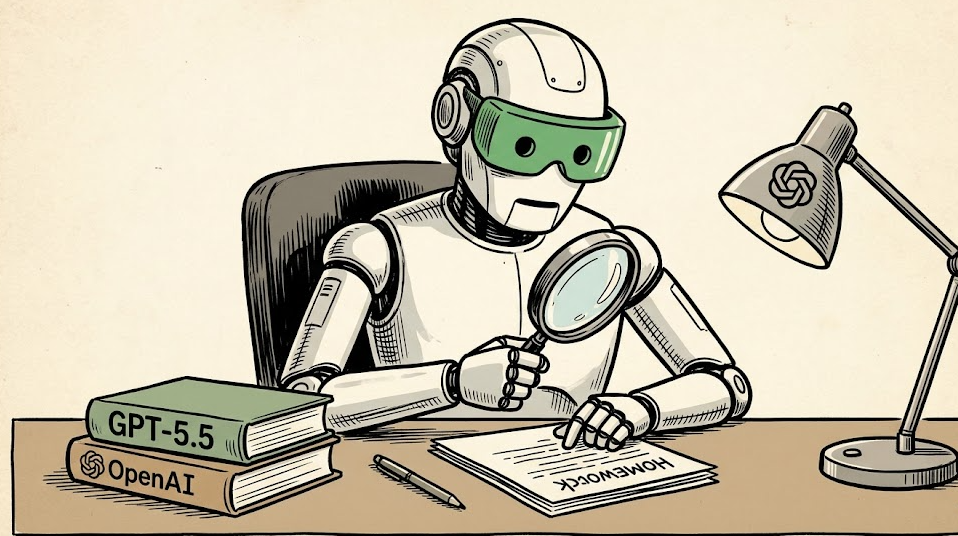
OpenAI released GPT-5.5 on April 23, 2026, after a brief leak on its Codex platform exposed the name a day earlier. It succeeds GPT-5.4 and is described as a more efficient, coding-focused update. Early reports say it improves on long-running tasks and asks for less hand-holding. It’s currently available only to paid users, not the free tier.
Article:
Honestly, I didn’t think we’d see a point-five this soon. We were still arguing about whether GPT-5 was a real leap, and then 5.5 just showed up in a dropdown menu.
What actually happened was a classic OpenAI leak. On April 23, a glitch in Codex briefly exposed unreleased models, including GPT-5.5, and developers on social media said they managed to test it. Hours later it was official. Wikipedia now lists the release date as April 23, 2026.
And it’s not just a rename. The early chatter is all about stamina, not poetry. This is a model tuned to stay on task, use tools, write code, check the output, and keep going without you babysitting every step.
That matters because most of us don’t need a better sonnet writer. We need something that will actually finish a multi-step job. The system card language around GPT-5 talked about agentic tasks and following detailed instructions, and 5.5 pushes that further.
The part people keep mentioning is self-checking. It’s not magic, but it does more internal verification before it answers. If you have ever spent an afternoon fixing basic mistakes, you know why that is a relief.
It is also clearly built for efficiency. OpenAI has been squeezing more performance out of the same hardware for months, and 5.5 is where that shows up. For companies running thousands of calls a day, cheaper per-task cost beats a flashy demo every time.
So far access is limited to paid tiers. That is consistent with how OpenAI rolls out point releases, they let Plus and Pro users kick the tires first, then decide if it goes wider.
Early testers say it feels less needy. It asks fewer clarifying questions, it recovers better from errors, and it is noticeably stronger on coding benchmarks that reward persistence over cleverness.
But the real test will be boring reliability. Can it run a 30-minute workflow, hit an API, parse the response, fix its own bug, and ship a result without hallucinating a library that does not exist? That is the bar now.
If it clears that bar, we are not looking at a better chatbot. We are looking at a junior employee that actually clocks in. And that is a very different conversation.
About the Author